

Wisdom Teeth Removal – Greater Steele Creek and Fort Mill Communities
What are wisdom teeth
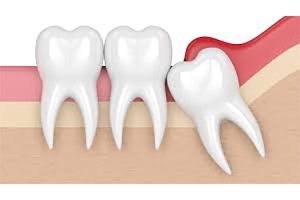 Third molars are commonly referred to as wisdom teeth. They are usually the last teeth to develop and are located in the back of your mouth, behind your second molars. Their development is usually completed between the middle teenage years and early twenties, a time traditionally associated with the onset of maturity and the attainment of wisdom.
Although most people develop and grow 32 permanent adult teeth, many times their jaws are too small to accommodate the four wisdom teeth. When inadequate space prevents the teeth from erupting they are called impacted wisdom teeth. This malalignment and lack of eruption leads to hygiene challenges and plaque accumulation.
Why should I Have My Wisdom Teeth Removed
Wisdom teeth are the last teeth to erupt within the mouth. When they align properly and gum tissue is healthy, wisdom teeth do not have to be removed. Unfortunately, this does not happen very often. The extraction of wisdom teeth is necessary when they are prevented from properly erupting within the mouth. They may grow sideways, partially emerge from the gum, and even remain trapped beneath the gum and bone. Impacted teeth can take many positions in the bone as they attempt to find a pathway that will allow them to successfully erupt.
These poorly positioned impacted teeth can cause many problems. When they are partially erupted, the opening around the teeth allows bacteria to grow and will eventually cause an infection. The result: swelling, stiffness, pain, and illness. The pressure from the erupting wisdom teeth may move other teeth and disrupt the orthodontic or natural alignment of teeth. The most serious problem occurs when tumors or cysts form around the impacted wisdom teeth, resulting in the destruction of the jawbone and healthy teeth. Removal of the offending impacted teeth usually resolves these problems. Early removal is recommended to avoid such future problems and to decrease the surgical risk involved with the procedure
Removal of Wisdom Teeth:
In most cases, the removal of wisdom teeth is performed under IV sedation (link to anesthesia page) to optimize patient comfort during this invasive procedure. The surgical time is typically 30-60 minutes. Once the teeth are removed, the gums are sutured close to protect the sockets and expedite gum healing. Following the procedure, gauze will be placed over the surgical sites to help control bleeding.
You will rest under our supervision in the office until you are ready to be taken home. Upon discharge, your postoperative kit will include instructions and prescriptions for antibiotics and pain medication. If you have any questions, please do not hesitate to call us at 704.366.8707.
Call Steele Creek Oral Surgery Phone Number 980-207-4398 to schedule your wisdom teeth consultation.
To read more about wisdom teeth view our informative pages below.
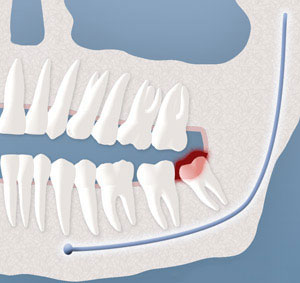
Infection:
The most frequent clinical problem we see is pericoronitis, (a localized gum infection). Without enough room for total eruption, the gum tissue around the wisdom tooth can become irritated and infected, resulting in recurrent pain, swelling, and problems with chewing and/or swallowing.
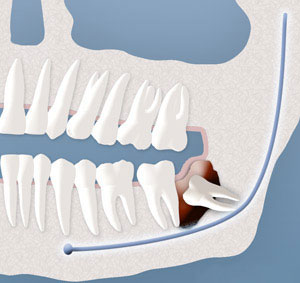
Cyst Formation:
Non-infectious diseases may also arise in association with an impacted wisdom tooth. Cysts are fluid-filled “balloons” inside the jaw bone that develop as a result of impacted teeth and slowly expand destroying adjacent jaw bone and occasionally teeth. They can be very difficult to treat if your wisdom teeth are not removed in your teenage years. Although rare, tumors can be associated with the delayed removal of wisdom teeth.
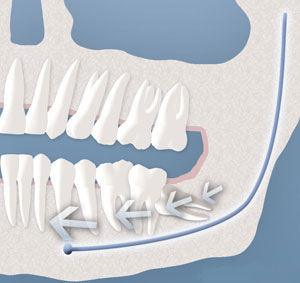
Possible Crowding:
Impacted wisdom teeth may contribute to crowding of your teeth. This is most noticeable with the front teeth, primarily the lower front teeth and is most commonly seen after a patient has had braces. There are a number of factors that cause teeth to crowd after braces or in early adulthood. Retained, impacted wisdom teeth may be a contributing factor. Unless you have an active problem when you see the oral surgeon, the reason for removal is primarily to prevent long-term damage to your teeth, gums and jaw bone.
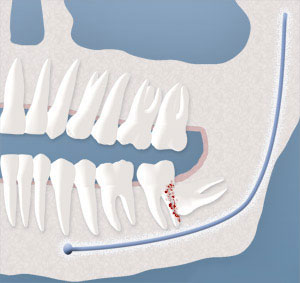
Damage to Adjacent Teeth:
If there is inadequate room to clean around the wisdom tooth, the tooth directly in front, the second molar, can be adversely affected resulting in gum disease, bone loss around the tooth, and/or decay.
Post-Operative Care:
The removal of impacted teeth is a serious surgical procedure and post-operative care is very important. Unnecessary pain and the complications of infection and swelling can be minimized if the instructions are followed carefully.
Immediately Following Surgery
- The gauze placed over the surgical area should be kept in place for 30 After this time, the gauze pad should be removed and discarded.
- Take the prescribed pain medications as outlined on the regimen
- Restrict your activities on the day of surgery and resume normal activity when you feel
- Vigorous mouth rinsing or touching the wound area following surgery should be This may initiate bleeding by causing the blood clot that has formed to become dislodged.
- Place ice packs on the sides of your face where surgery was performed, only the first 24 hours following the procedure. Refer to the section on swelling for an explanation.
Bleeding
A certain amount of bleeding is to be expected following surgery. Slight bleeding, oozing, or redness in the saliva is not uncommon. Excessive bleeding may be controlled by first rinsing or wiping any old clots from your mouth, then placing a gauze pad over the area and biting firmly for thirty minutes. Repeat if necessary. If bleeding continues, bite on a moistened tea bag for thirty minutes. The tannic acid in the tea bag helps to form a clot by contracting bleeding vessels. If bleeding does not subside, call for further instructions.
Swelling
The swelling that is normally expected is usually proportional to the surgery involved. Swelling around the mouth, cheeks, eyes and sides of the face is not uncommon. This is the body’s normal reaction to inflammation/surgery and eventual repair. The swelling will not become apparent until the day following surgery and will not reach its maximum until 2-3 days postoperatively. However, the swelling may be minimized by the immediate use of ice packs. Two baggies filled with ice, or ice packs should be applied to the sides of the face where surgery was performed. The ice packs should be used in a 20 minutes on, 20 minutes off continuous cycle while you are awake. After 24 hours, ice has no beneficial effect. If swelling or jaw stiffness has persisted for several days, there is no cause for alarm. This is a normal reaction to surgery. 24 hours following surgery, the application of moist heat to the sides of the face is beneficial in reducing the size of the swelling.
Pain
The pain following dental extractions is inflammatory in nature. The anti-inflammatory regimen provided by Dr. McWatters targets this process and should be followed consistently for the first several days. This consists of 600-800mg of Ibuprofen every six hours alternating with 500-975mg of Tylenol every six hours. A narcotic pain medication may be prescribed as a backup analgesic for refractory pain if multiple impacted teeth are removed or invasive surgery is performed. The narcotic pain medicine will make you groggy and will slow down your reflexes. Do not drive an automobile or work around machinery. Avoid alcoholic beverages. Pain or discomfort following surgery should subside more and more every day. If pain persists, it may require attention and you should call the office.
Diet
After general anesthetic or I.V. sedation, liquids should be initially taken while your mouth is numb. Do not use straws. Drink from a glass or use a spoon. The sucking motion can cause more bleeding by dislodging the blood clot. You may eat anything soft by chewing away from the surgical sites. High calorie, high protein intake is very important. Refer to the section on suggested diet instructions at the end of the brochure. Nourishment should be taken regularly. You should prevent dehydration by taking fluids regularly. Your food intake will be limited for the first few days. You should compensate for this by increasing your fluid intake. At least 5-6 glasses of liquid should be taken daily. Try not to miss a single meal. You will feel better, have more strength, less discomfort and heal faster if you continue to eat. Caution: If you suddenly sit up or stand from a lying position you may become dizzy. If you are lying down following surgery, make sure you sit for one minute before standing.
Keep the mouth clean
No rinsing of any kind should be performed until the day following surgery. You can brush your teeth the night of surgery but rinse gently. The day after surgery you should begin rinsing twice a day with the prescribed antibacterial mouthwash or warm salt water.
Antibiotics
If you have been placed on antibiotics, take the tablets or liquid as directed. Antibiotics will be given to help prevent infection. Discontinue antibiotic use in the event of a rash or other unfavorable reaction. Call the office if you have any questions.
Nausea and Vomiting
In the event of nausea and/or vomiting following surgery, do not take anything by mouth for at least an hour including the prescribed medicine. You should then sip on coke, tea, or ginger ale. You should sip slowly over a fifteen-minute period. When the nausea subsides you can begin taking solid foods and the prescribed medicine.
Other Complications:
- If numbness of the lip, chin, or tongue occurs there is no cause for alarm. As stated before surgery, this is usually temporary in You should be aware that if your lip or tongue is numb, you could bite it and not feel the sensation. So be careful. Call Dr. McWatters if you have any questions.
- A slight elevation of temperature immediately following surgery is not uncommon. If the temperature persists, notify the Tylenol or ibuprofen should be taken to reduce the fever.
- You should be careful going from the lying down position to You were not able to eat or drink prior to surgery. It was also difficult to take fluids. Taking pain medications can make you dizzy. You could get light-headed when you stand up suddenly. Before standing up, you should sit for one minute and then get up.
- Occasionally, patients may feel hard projections in the mouth with their They are not roots, they are the bony walls which supported the tooth. These projections usually smooth out spontaneously.
- If the corners of your mouth are stretched, they may dry out and Your lips should be kept moist with an ointment such as Vaseline.
- Sore throats and pain when swallowing are not The muscles get swollen. The normal act of swallowing can then become painful. This will subside in 2-3 days.
- Stiffness of the jaw muscles may cause difficulty in opening your mouth for a few days following This is a normal post-operative event that will resolve with increased jaw movement and time.
Finally
Sutures are placed in the area of surgery to minimize postoperative bleeding and to help healing by re-approximating the tissue. The sutures will dissolve by themselves in 7-10 days. Sometimes they become dislodged; this is no cause for alarm. Just remove the suture from your mouth and discard it.
The pain and swelling should subside more and more each day following surgery. If your post-operative pain or swelling worsens or unusual symptoms occur, call my office for instructions.
There will be a cavity where the tooth was removed. The cavity will gradually over the next month fill in with the new tissue. In the meantime, the area should be kept clean, especially after meals with salt water rinses or a toothbrush.
Brushing your teeth is okay – just be gentle at the surgical sites.
A dry socket is when the blood clot gets dislodged prematurely from the tooth socket. Symptoms of pain at the surgical site and even pain in the ear may occur 2-3 days following surgery. Call the office if this occurs.
Ready to Schedule a Consultation?
Drs. McWatters or Brown offers a number of dental treatments that can keep your mouth healthy and your smile beautiful. Contact us today!